Muscle relaxers are used in addition to rest, physical therapy, and other measures to relieve discomfort. They are typically prescribed for short-term use to treat acute, painful musculoskeletal conditions. Muscle relaxers are occasionally prescribed for chronic pain (pain lasting longer than 3 months).
Muscle relaxers are not a class of drugs—meaning they do not all have the same chemical structure or work the same way in the brain. Rather, the term muscle relaxer is used to describe a group of drugs that act as central nervous system depressants and have sedative and musculoskeletal relaxant properties.
Muscle relaxers may be prescribed to treat back pain:
- Early in the course of back pain, on a short-term basis, to relieve pain associated with muscle spasms
- When back pain causes insomnia (for their sedative effect)
Muscle relaxers are also prescribed for other conditions such as fibromyalgia, multiple sclerosis, and seizure disorders.
There are several types of muscle relaxer medications commonly used to treat back pain.
What is Muscle Relaxers ?
Muscle relaxers, or muscle relaxants, are medications used to treat muscle spasms or muscle spasticity.
Muscle spasms or cramps are sudden, involuntary contractions of a muscle or group of muscles. They can be caused by too much muscle strain and lead to pain. They’re associated with conditions such as lower back pain, neck pain, and fibromyalgia.
Muscle spasticity, on the other hand, is a continuous muscle spasm that causes stiffness, rigidity, or tightness that can interfere with normal walking, talking, or movement. Muscle spasticity is caused by injury to parts of the brain or spinal cord involved with movement. Conditions that can cause muscle spasticity include multiple sclerosis (MS), cerebral palsy, and amyotrophic lateral sclerosis (ALS).
Prescription drugs can help relieve the pain and discomfort from muscle spasms or spasticity. In addition, certain over-the-counter medications may be used to treat aches and pains associated with muscle spasms.
What is the best muscle relaxer?
It’s difficult to declare one muscle relaxant better than all others because each type has its own advantages and uses. In general, pain relief treatments fall into one of three categories: over-the-counter (OTC), prescription, and natural. Determining the best muscle relaxer depends entirely on your specific condition and pain level. When in doubt, consult your healthcare provider.
Over-the-counter remedies: OTC pain relievers are often the first line of defense against pain, inflammation, and tension. They can work wonders for milder conditions like neck and lower back pain. Typically, your doctor might start you out on an OTC medication, and if that doesn’t provide the relief you need, he or she may write a prescription for something higher-grade.
Prescription drugs: For more chronic pain and conditions where OTC medications just won’t cut it, your doctor may prescribe something stronger. Because of their more serious side effects, prescription muscle relaxers are designed for short-term use, after which your doctor will transition to other drugs or treatments.
Natural remedies: For minor soreness and stress-related symptoms, the only treatment you need might be drawn straight from nature. Before rushing off to the doctor for an examination and potential prescription, you might be able to administer an effective plant-based therapy right from home.
What is the best over-the-counter (OTC) medicine for muscle pain?
These are the medications that you can find while perusing the aisles at your local pharmacy or convenience store. Most of them are household names, and it’s not uncommon to keep them on hand, stashed in a medicine cabinet, just in case. Even though OTC medications are easy to obtain, they’ll do the job for many aches and pains, and doctors often recommend them prior to prescribing stronger treatment options.
“OTC NSAIDS, like ibuprofen and naproxen, are a good first line agent to decrease inflammation surrounding an injury,” recommends Joanna Lewis, Pharm.D., creator of The Pharmacist’s Guide. They might not have the same potency of high-grade muscle relaxants, but they’re still effective and have very few side effects. If you roll your ankle at the gym or wake up with back pain, try one of these before asking your doctor for a prescription.
- Advil (ibuprofen): This is a staple of parents, doctors, and athletes alike. Ibuprofen is one of the most widely used nonsteroidal anti-inflammatory drugs (NSAIDs) available. As such, Advil doesn’t just remedy pain, but also inflammation as well. It’s highly versatile. Use it to treat low back pain, osteoarthritis, menstrual cramps, fever, headaches, migraines, sprains, and other minor injuries. Low doses are available over the counter, but a doctor can prescribe higher doses as well.
- Motrin IB (ibuprofen): Don’t be fooled by the different brand name. Motrin IB and Advil are the same drug. Therefore, they shouldn’t be taken together, as it could increase the risk of overdose.
- Aleve (naproxen): Another medicine cabinet staple, naproxen is similar to ibuprofen in many ways. It’s also an NSAID, so it works by reducing inflammation. It’s useful in treating muscle pain, headaches, migraines, osteoarthritis, fever, cramps, and minor injuries. The main difference between naproxen and ibuprofen is their dosing. You can take naproxen every eight to 12 hours and ibuprofen every four to six, so Aleve is slightly longer-lasting.
- Aspirin: One more NSAID for you. Aspirin treats many of the same conditions, relieving pain and reducing inflammation. However, daily doses of aspirin have been proven effective at reducing the risk of blood clots, strokes, and heart attacks in some people. Ask your doctor before using for clot prevention. If you’re a candidate, you will likely take a “baby” aspirin, or 81 mg, coated tablet daily. Common brand names include Bayer or Ecotrin.
- Tylenol (acetaminophen): Unlike NSAIDs, acetaminophen focuses solely on treating pain—not inflammation. It’s used for muscle aches, headaches, migraines, back and neck pain, fevers, etc. However, if swelling and inflammation is the underlying cause of your pain, acetaminophen will not be nearly as effective as NSAIDs like those listed above. Acetaminophen’s wide range of uses and relatively few side effects make it the most popular OTC pain reliever worldwide.
Common Muscle Relaxant Prescription
Muscle relaxers are usually prescribed to treat back pain in conjunction with rest and physical therapy. Common muscle relaxants include:
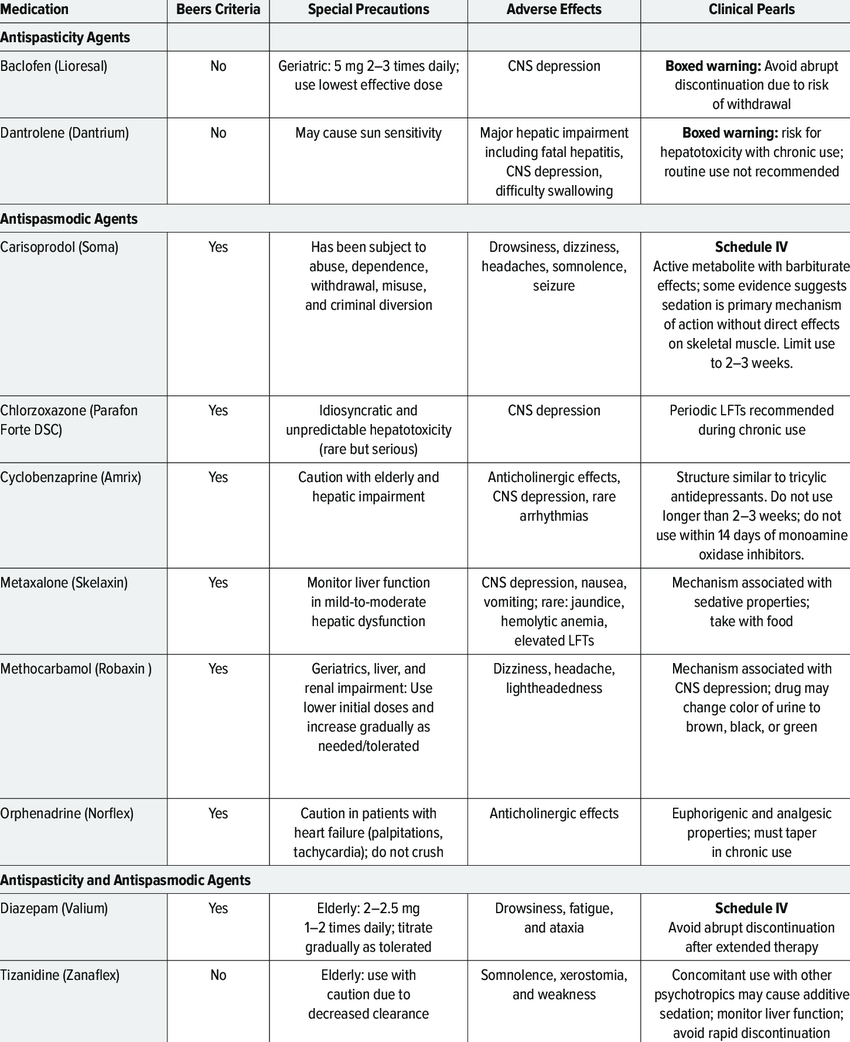
- Benzodiazepines. In addition to treating anxiety, alcohol withdrawal, and seizure disorders, such as epilepsy, benzodiazepines can also treat muscle spasms and skeletal pain. Benzodiazepines, such as diazepam (Valium), lorazepam (Ativan), and temazepam (Restoril), are typically only intended for short-term use. This limitation is due to their habit-forming potential and because they alter sleep cycles, leading to sleep difficulties once the drug is stopped. Benzodiazepines are sold as tablets, liquid, injections, and rectal gels. People who have myasthenia gravis, severe liver disease, serious breathing troubles, or some forms of glaucoma, should avoid taking diazepam. All benzodiazepines are rated D by the FDA for safety during pregnancy and are not recommended for women who are pregnant.
- Carisoprodol (Soma). Carisoprodol relaxes muscles and eases pain and stiffness caused by acute bone and muscle problems, often caused by an injury. It is taken by mouth in tablet form and is also available in combination with aspirin or aspirin and codeine. Carisoprodol can be habit-forming, particularly if used in conjunction with alcohol or other drugs that have a sedative effect, including opioids (such as codeine). Common side effects include drowsiness, dizziness, and headache. People with a history of blood disorders, kidney or liver disease, and seizures may need to avoid Carisoprodol. It is rated C in the FDA’s pregnancy safety ranking for medications.
- Chlorzoxazone (Lorzone). Chlorzoxazone is used for the relief of discomfort from acute, painful, musculoskeletal conditions. Chlorzoxazone is available as a tablet. Common side effects include drowsiness, dizziness, and nausea. Chlorzoxazone is not recommended for people with liver disease. It has not been rated by the FDA for safety during pregnancy.
- Cyclobenzaprine (Amrix, Fexmid, FlexePax Kit, FusePaq Tabradol). Cyclobenzaprine eases stiffness and pain from muscle cramps, also called muscle spasms. It is available as a tablet and extended-release capsule. Cyclobenzaprine itself is not intended for long-term use (more than 2 to 3 weeks). Common side effects include blurred vision, dizziness or drowsiness, and dry mouth. It is not advised for those with an overactive thyroid, heart problems, or liver disease. Cyclobenzaprine is rated B by the FDA for safety during pregnancy, making it the safest muscle relaxant to use while pregnant.
- Dantrolene (Dantrium). Dantrolene helps control chronic spasticity related to spinal injuries. It is also used for conditions such as stroke, multiple sclerosis, and cerebral palsy. Dantrolene is taken as a capsule or intravenous powder for injection. Drowsiness and sensitivity to light are common side effects. It can cause severe liver problems, and should not be taken by people with active liver disease. The FDA has given dantrolene a C rating for safety in pregnancy.
- Metaxalone (Skelaxin, Metaxall, and Metaxall CP, Lorvatus PharmaPak). Metaxalone targets pain and muscle spasms from sprains, strains, and muscle injuries. It is available as a tablet or injection. Common side effects include drowsiness, dizziness, nausea, and vomiting. Metaxalone is generally not recommended for people with a known tendency to become anemic, and who have kidney or liver disease. Metaxalone may affect blood sugar tests for people with diabetes. The FDA has not rated metaxalone for safety during pregnancy.
- Methocarbamol (Robaxin, Robaxin-750). Methocarbamol eases acute muscle and bone pain. It can be taken as a tablet or by injection. Common side effects include dizziness, headache, nausea, flushing, and blurred vision. Methocarbamol is generally not recommended to people with renal disease or failure, or a history of allergic reaction to the medication. The FDA has given methocarbamol a C rating for safety during pregnancy.
- Orphenadrine. Orphenadrine is a medication used to relieve pain and stiffness caused by muscle injuries. It is available as an extended-release tablet. Common side effects include dry mouth, lightheadedness, difficult urination, heartburn, nausea and vomiting. It is generally not recommended to people with previous sensitivities to the ingredients, myasthenia gravis, those with glaucoma or certain types of ulcers. The FDA has given orphenadrine a C rating for safety during pregnancy.
- Tizanidine (Comfort Pac with Tizanidine, Zanaflex). Tizanidine is used to treat muscle spasms caused by spinal cord injuries and other conditions such as multiple sclerosis. Tizanidine is available in tablet and capsule form and absorbs differently depending on whether it is taken on an empty stomach or with food. Common side effects include dry mouth, dizziness, constipation and tiredness. It should not be used by people taking fluvoxamine or ciprofloxacin or those who have liver disease. Tizanidine is rated in the C category for safety during pregnancy.
- Valium (diazepam): Most often, you’ll hear about Valium as a treatment for anxiety disorders and alcohol withdrawal symptoms, but it can also be an effective medication for muscle spasms. Diazepam is a benzodiazepine (like Xanax) that decreases the sensitivity of certain brain receptors. Dosage varies depending on the condition, but for skeletal muscle spasms, it’s typically 2-10 mg, three or four times per day. Because it slows down brain activity, Valium frequently causes fatigue and muscle weakness so, like other muscle relaxants, you shouldn’t combine it with alcohol or other drugs.
- Lioresal (baclofen): Unlike the muscle relaxants above it on this list, baclofen is primarily used to treat spasticity (continuous muscle tightness or stiffness) caused by multiple sclerosis or spinal cord injury. It is given as an oral tablet, or can be injected into the spinal theca. Most often, baclofen is prescribed on a schedule that increases the dosage gradually every three days. It can cause sleepiness, dizziness, nausea, hypotension (low blood pressure), headache, convulsions, and hypotonia (weak muscle tone), so even though it’s effective for spasticity treatment, it might not be the best option for pain relief.
- Dantrium (dantrolene): Similar to baclofen, dantrolene is primarily used to treat spasticity. It’s effective for spasms associated with spinal cord injury, stroke, cerebral palsy, or multiple sclerosis, and is also sometimes used for malignant hyperthermia. Common side effects include diarrhea, drowsiness, dizziness, fatigue, and muscle weakness. The starting dosage is 25 mg daily and it can be increased slowly if needed, up to 100 mg three times daily. In rare cases of overuse or long-term use, it has been attributed to liver damage.
- Norflex (orphenadrine): In addition to treating injury-related pain and spasms, orphenadrine is also effective in relieving the trembling from Parkinson’s disease. Some patients may experience dry mouth along with heart palpitations, blurred vision, weakness, nausea, headache, dizziness, constipation, and drowsiness, but usually only with increased dosages. However, this muscle relaxant can sometimes cause anaphylaxis, a type of severe allergic reaction. So, for basic muscle pain, doctors often go with one of the other options on this list. Standard dosing is 100 mg, twice per day.
Sometimes the first muscle relaxers a doctor prescribes does not work as well as expected. It may be necessary to try an alternative if the initial prescription is not effective. Many drugs interact with muscle relaxers and a person should keep their health care provider informed of all prescription and non-prescription medications he or she is taking.
There is very little research regarding which muscle relaxers are most effective, so the choice of which medication—or whether to use one at all—is based on factors such as a person’s reaction to the medication and personal preferences, potential for abuse, possible drug interactions, and adverse side effects.
Medication is just one part of pain relief. These medications are intended to be one element, usually on a short-term basis, of an overall recovery strategy that includes rest, stretching, physical therapy, and other exercise.
Side Effects Associated with Muscle Relaxers
Side effects of muscle relaxers include:
- Sleepiness or grogginess
- Fatigue
- Dry mouth
- Constipation
- Nausea
More serious side effects include:
- Light-headedness or fainting
- Blurred vision
- Confusion
- Urinary retention
Any serious side effects should be reported to a doctor immediately.
Risks Associated with Muscle Relaxers
Muscle relaxers are a group of drugs that have a sedative effect on the body. They work through the brain, rather than directly on the muscles. Muscle relaxants are generally used for a few days and up to 3 weeks, but are sometimes prescribed for chronic back pain or neck pain.
To minimize risk, the doctor should be informed of any history of seizures, liver disease, and any other medical conditions or concerns. Women should inform their doctors if they are pregnant, plan to become pregnant, or are breast-feeding.
- Sleepiness. Because muscle relaxers are total body relaxants, they typically induce grogginess or sleepiness. As a result, it is not safe to drive or make important decisions while taking muscle relaxers. Muscle relaxers are often suggested for evening use due to their sedative effect.
- Interactions with alcohol. Drinking alcohol can be especially dangerous when taking muscle relaxers. The sedative effect of the medication is intensified with alcohol use, and combining the two can be fatal.
- Allergic reactions. No medication should be taken if the person has had an allergic reaction to it in the past, even if the reaction seemed mild. Symptoms of an allergic reaction include swelling in the throat or extremities, trouble breathing, hives, and chest tightness.
- Potential for abuse. Muscle relaxers have a risk of misuse and abuse. Some muscle relaxers, such as cyclobenzaprine, can be habit-forming on their own. Others may be taken in conjunction with other drugs, such as opioids, to create a high, and are therefore more likely to be abused.
- Tapering off. Stopping a muscle relaxer abruptly can be harmful. Instead, the doctor will prescribe a gradual reduction in dosage.
Any serious side effects should be reported to a doctor immediately.
How do muscle relaxants work?
Muscle relaxants work by causing the muscles to become less tense or stiff, which in turn reduces pain and discomfort. They do this in different ways. Baclofen, diazepam, methocarbamol and tizanidine act on the central nervous system (brain and spinal cord). Dantrolene works directly on the muscle. Cannabis extract works on the brain and spinal cord as well as the muscles. Because dantrolene only works on the muscles, it is thought to have fewer side-effects compared with other muscle relaxants. For this reason, dantrolene is often the first muscle relaxant to be prescribed for people with long-term muscle spasms.
Other considerations
Muscle relaxants are sometimes used to treat other conditions – for example, diazepam is sometimes used to treat anxiety or difficulty with sleeping (insomnia). It is given as a pre-medication (often called a ‘pre-med’) before an operation, particularly during procedures that may cause anxiety or discomfort.
It can also be used to treat seizures. Rectal diazepam tubes may be prescribed for this, as they are useful if a quick effect is needed or if it is not possible to give the medicine by mouth.
Some medicines that are given by injection into the vein during surgery are also known as muscle relaxants. They are sometimes called ‘neuromuscular blocking drugs’ and are used to relax the muscles during surgery. They work in a completely different way to baclofen, dantrolene, diazepam, tizanidine, and cannabis extract and are not discussed here.
There are a number of other things to consider when taking muscle relaxants:
- These medicines can cause drowsiness. If you feel drowsy when taking these medicines, do not operate machinery, do not drive, and do not drink alcohol.
- Baclofen should not be stopped suddenly. The dose should be lowered slowly over a few weeks and then stopped.
- Diazepam – people who take this medicine continuously for more than two weeks can become dependent on it. This means that withdrawal symptoms occur if the tablets are stopped suddenly.
What is the best natural muscle relaxer?
Let’s say your pain is lifestyle-related. Maybe a new workout routine put you through the wringer, or slouching over your laptop has started to take its toll on your back and neck. Minor soreness or aches happen all the time for any number of reasons, and they might not be severe or chronic enough to warrant muscle relaxers or other pain relievers. The good news is that there are plenty of natural remedies and dietary solutions to mild body pain. Even better is that you can find most of these treatments in food and supplements.
Dr. Lewis considers certain natural remedies ideal for stress management or to supplement other treatments. “Lavender oil and chamomile are great ingredients for relaxation when taking a bath or getting ready for bed,” she says. “They aren’t usually a first-line treatment but are great in conjunction with other things to manage tension from stress.”
CBD oil (cannabidiol) has been a popular but widely-debated natural supplement. Extracted from the hemp plant, it doesn’t cause a “high,” but it can be effective in treating epilepsy, anxiety, and general pain, among other ailments. Many swear by it for a broad scope of conditions, but research is currently ongoing as to what else it can do.
Additionally, the Food and Drug Administration (FDA) has only approved one CBD product, Epidiolex, which may be prescribed to treat two rare forms of epilepsy. “Many [CBD products] are not regulated, [so] the effectiveness between products is not consistent,” Dr. Lewis explains.
Or, you may have heard of arnica gel, made from an herb native to central Europe. It’s commonly used to treat injury-related pain and swelling and arthritis. Like CBD, there isn’t extensive research on it yet, but arnica has shown promise as a natural pain remedy.
Going the natural route? These natural muscle relaxants can promote pain-free living and holistic health:
| Natural Remedy | Administration Route | Common Treatments |
| Chamomile tea | Oral | Anxiety, inflammation, insomnia |
| CBD oil | Oral, topical | Epilepsy, anxiety, chronic pain |
| Arnica gel | Topical | Osteoarthritis, muscle aches/soreness |
| Cayenne pepper | Oral, topical | Stomach pain, joint pain, heart conditions, cramps |
| Lavender oil | Topical | Anxiety, insomnia, general pain relief |
| Magnesium | Oral | Muscle cramps, indigestion, constipation |
| Lemongrass | Oral, topical | Stomach ache, digestive tract spasms, rheumatoid arthritis |
| Turmeric | Oral | Osteoarthritis, indigestion, abdominal pain |
| Massage, physical therapy | Topical | Muscle pain, soreness, stress, anxiety |
While this list isn’t exhaustive, it presents you with plenty of options, no matter what has you hurting. As always, consult your healthcare provider for professional medical advice before taking a new medication. Even natural treatments can cause serious drug-drug interactions.
For a more detail list of Natural Muscle Relaxant list, please check
- List of Common Muscle Relaxers
- How long does Fioricet stay in your system?
- Is Fioricet Considered a Narcotic?
- Medications for Back Pain and Neck Pain
- Compare Fioricet vs. Topamax
- Is Alinia an Antibiotic ?
- Fioricet with Codeine
- List of Controlled Substances
- What is ascites and how is ascites treated ?
- Gleevec is under patent in the U.S., but not in India
- The big price difference of Gleevec between china and India makes Chinese Cancer Patient Criminals
- List of Opioid Analgesics and Commonly Abused Narcotics & Opioids
- what is Corticosteroids and Corticosteroids side effects ?
- What is Antidepressant and Anti-depressant Side Effects ?
- What is muscle relaxants and What is the main side effect of Muscle Relaxants ?
- What are common prescription opioids and What are the Opioid Side Effects?
- Why Are Opioid Analgesics The Strongest Pain-relieving Medications and Why Opioids Are Dangerous?
- What is the benefits of CBD oil ?
- How many health conditions can Gabapentin treat ?
- Tizanidine
- What is the triggers of migraine and how to kick your headache away ?
- A List of Skeletal muscle relaxants
- What are Skeletal muscle relaxants?
- Warnings for prescription muscle relaxants
- Aspirin side effects
- What is aspirin?
- Foods and Pain Relief
- Why should I become a nu skin distributor
- Magnetic Pain Aid Belts
- Tramadol Metabolism
- NDC 50458-659-60 50 mg tramadol Tablet Bottle
- The potential risks associated with pain medicines used during pregnancy
- Facts about pain medicines during pregnancy
- The top searched Pain Relief drugs
- What Is Osteoarthritis?
- A Nation Addicted To Pills
- Nine Different Treatment Methods for arthritis, knee Pain, and hip pain
- What kinds of Nutrition and Nature products can relieve Pain ?
- Valium Withdrawal
- Valium Drug Abuse And Dependence
- What are the possible side effects of diazepam (Valium)?
- What is diazepam (Valium)?
- Ultram vs. Tramadol. Are they the same thing?
- Ice Therapy for Musculoskeletal Pain
- What is The gate control theory of pain ?
- How Flexeril is supplied
- What is Flexeril?
- Targiniq ER made by Purdue Pharma discourages potential abusers from snorting or injecting
- Treatment for Osteoarthritis – Pain in Joints
- Oxy Powder for an Aching Tummy
- Cigarettes Can Be a Antidepressants for Smokers
- The history of bayer Aspirin
- An Overview of Osteoarthritis and Its Management
- Back Pain | Treatment and Herbal Remedies for Back Muscle Pain
- The history of bayer Aspirin
- What Types of Osteoarthritis Treatment Are Available?
- Pipeline Insight: Moderate-to-severe Acute Pain – Positive Outlook For Opioid-sparing Analgesics
- 5 Foods That Relieve Pain Naturally
- What Are the Causes of Osteoarthritis
- The Antidepressants Aid Depressed Parkinson’s Patients!
- Aspirin May Protect Against Breast Cancer
- Chondroitin Liquid & Cures For Osteoarthritis
- Osteoarthritis Pain Relief and Prevention Information
- Destroyit Set To Release The 4002 Super Micro Cut Shredder
- The Benefits of Aspirin
- Supplements For Osteoarthritis in Pets
- Physiotherapy is the answer for joint pain, muscle pain and movement disorder
- Umbilical cord stem cells prove themselves effective for lupus therapy
- The Use of Antidepressants for Eating Disorders
- Important Facts About Osteoarthritis of the Knee
- Alarming Facts About Osteoarthritis on the Hip
- Antidepressants Accountable for High Suicide Rates
- Is it Lupus? Rheumatoid Arthritis? How to Tell the Difference
- Alternative Therapies – Lupus and the Benefits of Fish Oil
- Muscular Pain And Muscle Strains: Treatment For The Pain
- Glucosamine for Dogs against Canine Osteoarthritis
- Foot Corn Removal
- An Review of the Different Osteoarthritis Medications
- Jimmy Foot
- Hsm 411.2 Hs 6 Bundle High Security Shredder With Oiler Released
- Home Remedies For Heel Pain And Foot Pain
- Are All Osteoarthritis Treated with Joint Replacement
- Ibuprofen Official FDA information, side effects and uses
- In Bible Vs Quran, Man ate the bread of Angels
- Babies Face Risks Due to Antidepressants
- How To Prevent Muscle And Shoulder Pain
- Regular Exercise May Help Prevent Osteoarthritis
- Electrical And Lighting – Some Tips To Do It Yourself
- Abnormal Alignment Causes Osteoarthritis
- Hsm 225.2 Hs 6 Bundle High Security Shredder With Oiler Available Now
- How to prevent the incidence of systemic lupus erythematosus?
- Aspirin a lifesaver
- The Many Faces of Antidepressants
- Nm – Muscle Pain Relief Tapes
- The Secret to Curing Back Muscle Pain
What is SMRs ( Skeletal Muscle Relaxants ) ?
Centrally acting SMRs are used in addition to rest and physical therapy to help relieve muscle spasms. They’re thought to work by causing a sedative effect or by preventing your nerves from sending pain signals to your brain.
You should only use these muscle relaxants for up to 2 or 3 weeks. The safety of longer-term use is not yet known.
While antispasmodics can be used to treat muscle spasms, they have not been shown to work better than nonsteroidal anti-inflammatory drugs (NSAIDs) or acetaminophen. In addition, they have more side effects than NSAIDs or acetaminophen.
The more common side effects of centrally acting SMRs include:
- drowsiness
- dizziness
- headache
- nervousness
- reddish-purple or orange urine
- lowered blood pressure upon standing
You should talk to your doctor about the benefits and risks of these medications for the treatment of your muscle spasms.
List of centrally acting SMRs
| Generic name | Brand name | Form | Generic available |
| carisoprodol | Soma | tablet | yes |
| carisoprodol/aspirin | not available | tablet | yes |
| carisoprodol/aspirin/codeine | not available | tablet | yes |
| chlorzoxazone | Parafon Forte, Lorzone | tablet | yes |
| cyclobenzaprine | Fexmid, Flexeril, Amrix | tablet, extended-release capsule | tablet only |
| metaxalone | Skelaxin, Metaxall | tablet | yes |
| methocarbamol | Robaxin | tablet | yes |
| orphenadrine | Norflex | extended-release tablet | yes |
| tizanidine | Zanaflex | tablet, capsule | yes |
What is Antispastics ?
Antispastics are used to treat muscle spasticity. They should not be used to treat muscle spasms. These drugs include:
Baclofen: Baclofen (Lioresal) is used to relieve spasticity caused by MS. It’s not fully understood how it works, but it seems to block nerve signals from the spinal cord that cause muscles to spasm. Side effects can include drowsiness, dizziness, weakness, and fatigue.
Dantrolene: Dantrolene (Dantrium) is used to treat muscle spasms caused by spinal cord injury, stroke, cerebral palsy, or MS. It works by acting directly on the skeletal muscle to relax the muscle spasm. Side effects can include drowsiness, dizziness, lightheadedness, and fatigue.
Diazepam: Diazepam (Valium) is used to relieve muscle spasms caused by inflammation, trauma, or muscle spasticity. It works by increasing the activity of a certain neurotransmitter to decrease the occurrence of muscle spasms. Diazepam is a sedative. Side effects can include drowsiness, fatigue, and muscle weakness.
List of antispastics
| Generic name | Brand name | Form | Generic available |
| baclofen | Lioresal, Gablofen, Lioresal | tablet, injection | yes |
| dantrolene | Dantrium | tablet | yes |
| diazepam | Valium | oral suspension, tablet, injection | yes |
Warnings for prescription muscle relaxants
Muscle relaxants such as carisoprodol and diazepam can be habit forming. Be sure to take your medication exactly as prescribed by your doctor.
Muscle relaxants can also cause withdrawal symptoms, such as seizures or hallucinations (sensing things that aren’t real). Do not suddenly stop taking your medication, especially if you’ve been taking it for a long time.
Also, muscle relaxants depress your central nervous system (CNS), making it hard to pay attention or stay awake. While taking a muscle relaxant, avoid activities that require mental alertness or coordination, such as driving or using heavy machinery.
You should not take muscle relaxants with:
- alcohol
- CNS depressant drugs, such as opioids or psychotropics
- sleeping medications
- herbal supplements such as St. John’s wort
Talk to your doctor about how you can safely use muscle relaxants if you:
- are older than 65 years
- have a mental health problem or brain disorder
- have liver problems
Off-label medications for spasticity
Doctors can use certain medications to treat spasticity even when the drugs are not approved for that purpose by the U.S. Food and Drug Association (FDA). This is called off-label drug use. The following drugs are not actually muscle relaxants, but they can still help relieve symptoms of spasticity.
Benzodiazepines
Benzodiazepines are sedatives that can help relax muscles. They work by increasing the effects of certain neurotransmitters, which are chemicals that relay messages between your brain cells.
Examples of benzodiazepines include:
- clonazepam (Klonopin)
- lorazepam (Ativan)
- alprazolam (Xanax)
Side effects of benzodiazepines can include drowsiness and problems with balance and memory. These drugs can also be habit forming.
Clonidine
Clonidine (Kapvay) is thought to work by preventing your nerves from sending pain signals to your brain or by causing a sedative effect.
Clonidine should not be used with other muscle relaxants. Taking it with similar drugs increases your risk of side effects. For instance, taking clonidine with tizanidine can cause very low blood pressure.
Clonidine is available in brand-name and generic versions.

Gabapentin
Gabapentin (Neurontin) is an anticonvulsant drug typically used to relieve seizures. It’s not fully known how gabapentin works to relieve muscle spasticity. Gabapentin is available in brand-name and generic versions.
OTC treatment is recommended as first-line therapy for muscle spasms caused by conditions such as acute lower back pain or tension headache. This means you should try OTC treatments before prescription medications.
OTC treatment options include nonsteroidal anti-inflammatory drugs (NSAIDs), acetaminophen, or a combination of both. Your doctor or pharmacist can help you choose an OTC treatment.
Nonsteroidal anti-inflammatory drugs (NSAIDs)
NSAIDs work by blocking your body from making certain substances that cause inflammation and pain. NSAIDs are available in generic and brand-name versions. They’re typically sold over the counter. Stronger versions are available by prescription.
NSAIDs come as oral tablets, capsules, or suspensions. They also come as chewable tablets for children. Side effects of these drugs can include upset stomach and dizziness.
Examples of NSAIDs include:
- ibuprofen (Advil, Motrin)
- naproxen (Aleve)
Acetaminophen
Acetaminophen (Tylenol) is thought to work by blocking your body from making certain substances that cause pain. Acetaminophen is available in generic and brand-name versions. It comes as immediate-release and extended release oral tablets and capsules, orally disintegrating tablets, chewable tablets, and oral solutions.
The more common side effects of acetaminophen can include nausea and upset stomach.